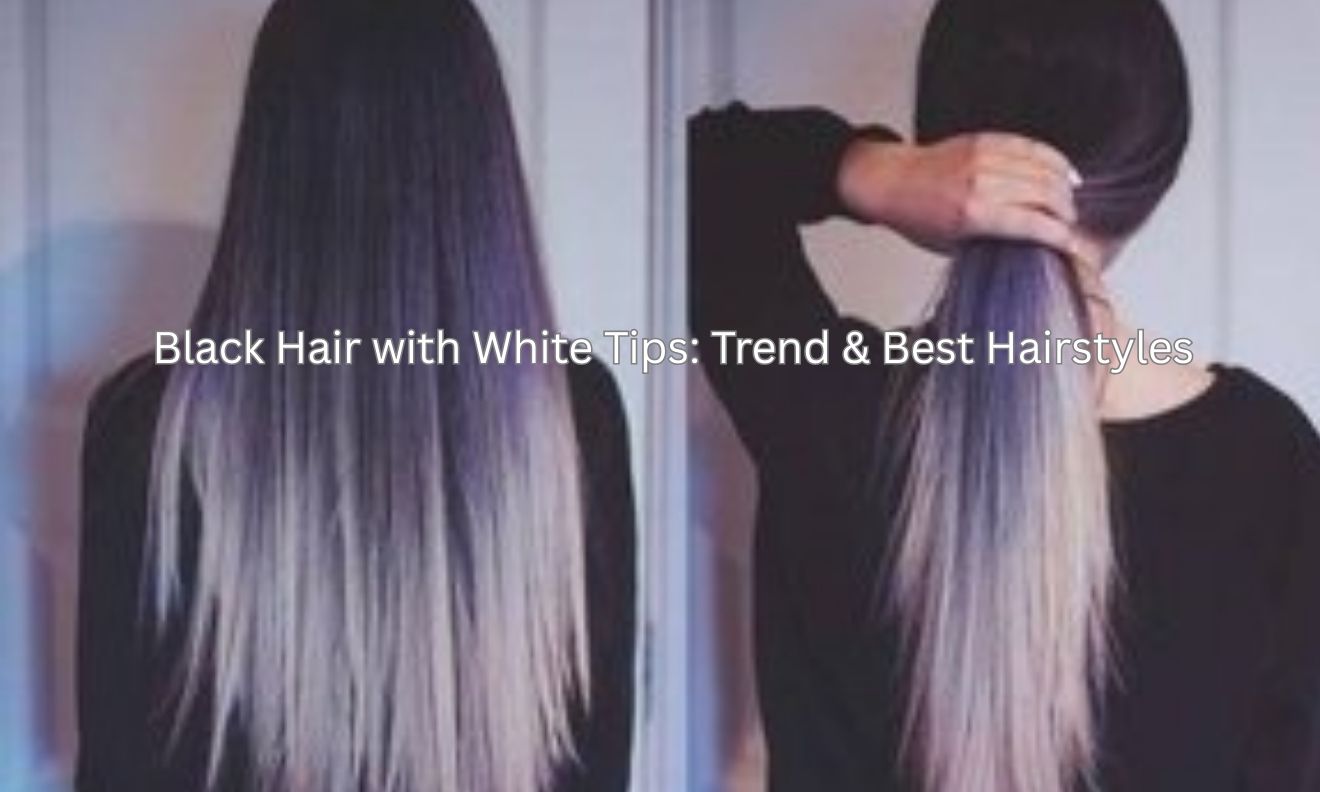
In the ever-evolving world of haircuts, one of the most striking looks is Black hair with white tips. The striking differentiation between the light and the dull makes a tense and advanced visual that piques the intrigue and curiosity of casual spectators and fashion devotees. This article examines the intriguing trend’s foundation, strategies, and social significance.
Dark hair with white tips, moreover known as “dip-dyed” or “iced” closes, is becoming progressively prevalent among individuals who need to deliver their appearance a small defiant pizazz without changing their hair color. This fashion makes exploring with strong, differentiating tints basic while keeping one’s normal hair color. Whether accomplished through normal means or fake shading, the outcome is a head-turning look that tells much about the wearer’s certainty and style sensibilities.
The Style of Black Hair with White Tips
The fashion of dark hair with white tips begins in a few diverse subcultures and design developments. Indeed, even though it’s difficult to say where precisely this fashion came from, the elective and punk scenes of the 1970s and 1980s were where it truly took off. Bizarre haircuts and colors were well-known for self-expression and resistance against social standards during this period.
The slant has returned to standard notoriety in a long time, moving from the borders of elective design. This brave See has picked up broad ubiquity due to its grasp by fashion-forward people, influencers, and celebrities. Since it is versatile to different hair lengths, surfaces, and aesthetics, the fashion is available to numerous individuals.
Natural vs. Artificial: Understanding the Look
Although “dark hair with white tips” may suggest an artificial coloring process, it is essential to remember that this appearance can be achieved naturally in some people. Knowing the difference between naturally occurring and artificially created white tips can help appreciate the style and select the appropriate method for achieving it.
White Natural Tips
A condition known as poliosis is characterized by the absence of melanin, the pigment that gives hair its color, in certain hair patches in some people in very unusual circumstances. White or gray streaks may appear in otherwise Black hair as a result. Even though polio usually only affects a few random areas of a person’s hair, it can sometimes leave a natural “dip-dyed” look, especially if it mostly affects the ends of the hair.
Fabricated white tips
Various hair coloring methods are used to achieve the appearance of dark hair with white tips. These methods can precisely control the white tips’ placement, intensity, and overall effect. Artificial coloring opens up a world of options, allowing people to create the Look they want—whether they want a subtle frosted look or a stark, high-contrast look.
How to Get the Look: Dyeing Methods
Several dyeing methods can artificially create the look of dark hair with white tips. The choice of method is frequently determined by personal preferences, hair type, and the desired effect. Some well-liked approaches include:
a) Bleaching
Freehand painting is described by the French word for “to sweep.” Lightener is applied to the hair in a sweeping motion to create a gradient effect that looks natural. Balayage would focus on gradually lightening the ends of dark hair with white tips to smooth the transition from Black to light hair with white tips.
b) Color
Ombre, like balayage, creates a gradual color change. However, the Black and light sections of the ombre typically have a more distinct line. A black-to-white ombre would completely lighten the lower portion of the hair to achieve a more striking contrast with the natural black hair.
c) Dye-dip
The most striking contrast between the white tips and the black hair is created using this method. The process involves “dipping” the hair’s ends in a lighter to draw a clear line between the hair’s natural color and the lightened ends. This is your method if you want a bold, edgy look.
d) Glazing
Frosting is lightening small sections of hair, usually at the ends, to produce a “frosted” appearance. For those who prefer a more mellow appearance, this method can result in white tips that are less obvious.
e) Foliation
While creating white tips is less common, foiling can be used to precisely section off lightened hair. Instead of creating an all-over tips effect, this method can add white streaks or chunks to black hair.
White tips on black hair are typically achieved by bleaching to remove the natural pigment and toning to get the desired white color. Because a significant amount of lightening is required to achieve a true white color, this procedure can damage the hair, particularly for naturally Black people.
Styling Options for Black Hair with White
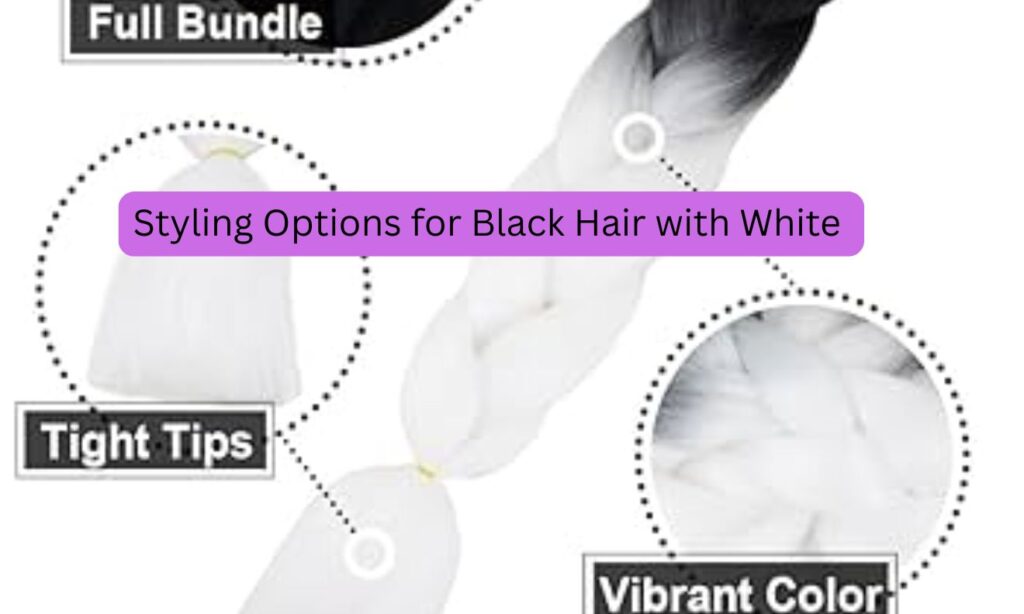
One of the most energizing highlights of dark hair with white tips is its elaborate flexibility. The stark difference between light and dim gives a one-of-a-kind background for an assortment of haircuts, each of which brings out the color differentiation in an interesting way. Some popular options for styling include:
a) Clean and Simple
A striking, polished look can be achieved by straightening dark hair with white tips. The bold statement that the color transition can be seen clearly is made possible by the smooth texture.
b) Curly or Wavy
White-tip hair looks more dynamic and textured when waves or curls are added. The hair’s movement creates an intriguing visual effect, which causes the light tips to peek through the Blacker strands.
c) Braids and updos
The color contrast can be presented in novel ways through intricate updos and braided styles. For instance, a French braid with white tips peeking out at the end creates a stunning gradient effect.
d) Cuts Layered
By increasing the opportunities for the lighter ends to shine through the Blacker layers, layered haircuts can enhance the impact of white tips.
Care and Maintenance
Dark hair with white tips requires special attention to maintain the color and health of the hair. Some important maintenance tips are as follows:
a) Utilize Products Safe for Color
Ensure your shampoos and conditioners are for color-treated hair. The black and white sections remain vibrant, and color fidelity is preserved thanks to these products.
b) Avoid Heat Damage
The white tips can turn brassy or yellow from heat styling. Before using hot tools, always use a heat protectant and minimize heat styling whenever possible.
c) Consistent Toning
White tips may need to be toned regularly to keep them looking bright and crisp. Any yellowing or brassiness can be combated with purple shampoos or toners.
d) In-Depth Training
The bleaching process necessary to get white tips can be drying for the hair. Standard profound conditioning medications can help protect dampness and avoid brittleness.
e) Normal trimming
Normal trimming is basic to keep a sharp line between the Black hair and the white tips and avoid part closes.
Conclusion : Black Hair with White Tips
Black hair with white tips is a striking and flexible haircut that has captured the creative energy of design devotees worldwide. It requires extensive bleaching, which can damage hair. It is high maintenance, requiring frequent touch-ups and special care. It may only be appropriate for some professional environments.
It is expensive to achieve and maintain. This Look continues to evolve and adapt to changing tastes and technologies, from its origins in counter-culture movements to its current status as a fashion statement for the mainstream.
This style is appealing because it can be applied and maintained in various ways and still have a strong visual impact. Dark hair with white tips lets people show off their personality and creativity through their appearance, whether they get it naturally or by coloring it.